
 Back
BackJULY 20, 2026
What Is Principal on an Auto Loan?
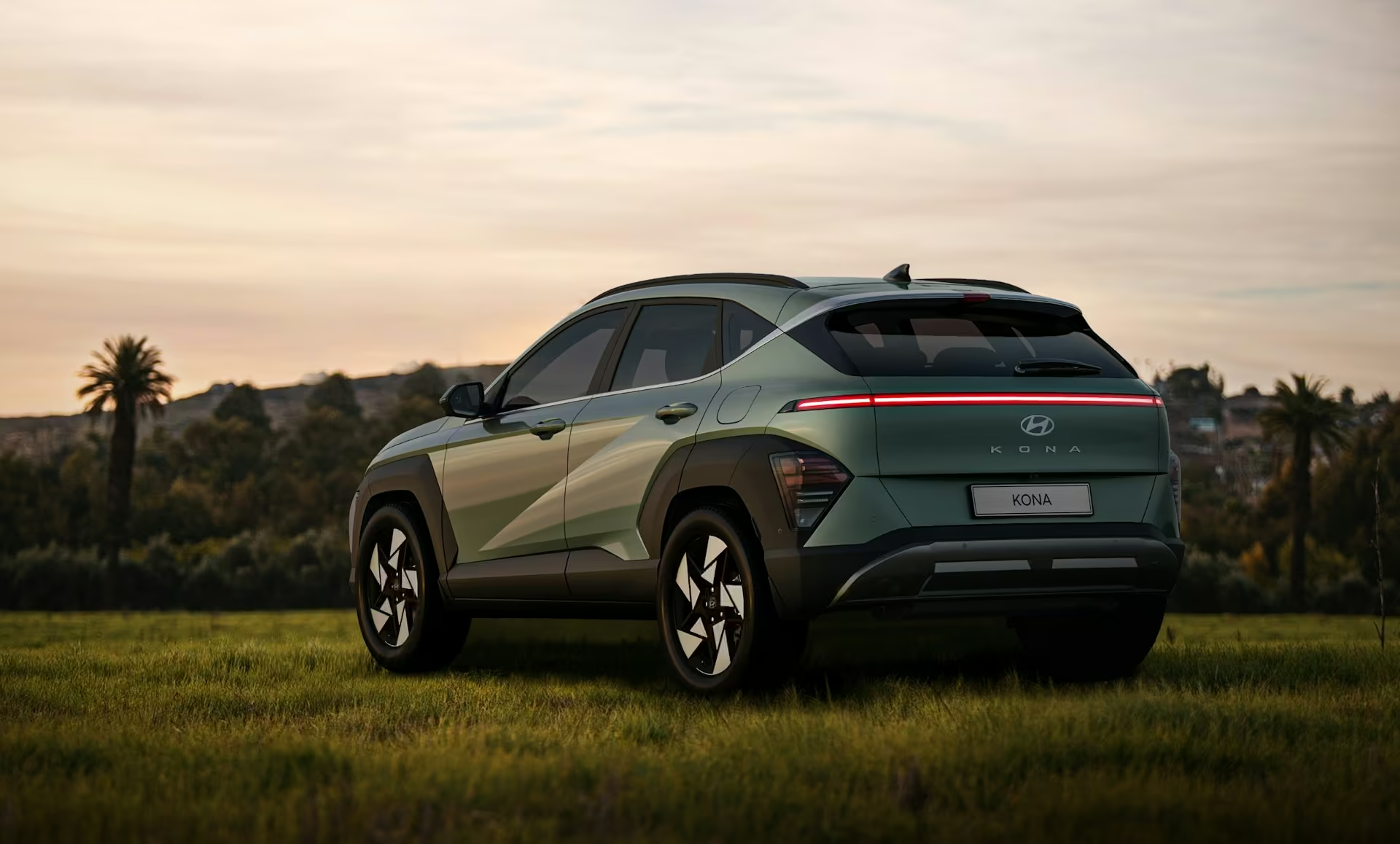
Principal is the amount of money borrowed to finance the vehicle before interest is added.
Principal in plain English
The principal begins with the amount financed after the down payment, trade credit, rebates, taxes, fees, and any rolled-in balances are accounted for.
Each payment may include both principal and interest. Early in a simple-interest loan, a larger share of the payment can go toward interest because the outstanding principal is higher.
The vehicle price and the loan principal are not always the same number.
What can increase principal
The amount borrowed can include more than the negotiated vehicle price.
- 1
Taxes and registration
Government charges may be included in the financed balance.
- 2
Dealer or lender fees
Documentation and other valid charges may be rolled into the loan.
- 3
Optional products
Service contracts or protection products increase principal when financed.
- 4
Negative equity
An unpaid balance from the trade can be added to the new loan.
A practical example
A vehicle may sell for $40,000, but taxes, fees, optional products, and $3,000 of negative equity can push the principal above $47,000.
The customer should compare the complete amount financed rather than assuming the loan equals the advertised vehicle price.
Common questions
Does every payment reduce principal? Normally yes, although the allocation between interest and principal changes over time.
Can I pay principal early? Many auto loans allow additional principal payments, but the contract should be checked for rules or penalties.
Is principal the same as payoff? No. Payoff can include accrued interest and other amounts due at the payoff date.
Related terms
Continue with amount financed, finance charge and negative equity.
Reviewing an auto loan?
Belgravia can help identify what entered the principal and whether the vehicle price, trade, fees, and products are being presented clearly.